
Hollywood films routinely earn hundreds of crores in India, but Indian cinema is still struggling to establish a similar foothold in English-speaking markets. For major studios and producers, breaking into those territories remains the next big milestone. And if the recent overseas performance of Dhurandhar is any indication, Indian cinema may be inching closer to that goal. But before conquering international markets, industry leaders believe there is another challenge to overcome: truly unifying the Indian audience across language barriers. According to Jyoti Deshpande, President, Media & Content Business at Jio Studios and Reliance Industries, Dhurandhar has already taken a significant step in that direction, with its Hindi version reportedly earning nearly Rs 400 crore from South Indian states alone.
‘Dhurandhar earned over a million euros in Germany’
Speaking to The Economic Times, Deshpande said India is making gradual progress in non-English-speaking international markets, but the real breakthrough will come when Indian films successfully penetrate English-speaking territories.

“While we are making small progress in non-English-speaking countries, we are still far from where we want to be,” she said. Recalling the film’s overseas performance, she added, “Dhurandhar did over a million euros in Germany. That couldn’t have been only Indians contributing to those numbers. We released in Finland for the first time. We are releasing in Japan in a couple of months. We are trying to take our films to newer markets while also consuming Hollywood content. But the real numbers will come when we crack the English-speaking countries.”
According to Deshpande, the key lies in creating stories that transcend language barriers while matching global production standards.
“We need stories that can travel without the language barrier and production values that can compete internationally. Whether it is mythology, action, or something else—we don’t know yet. But we will keep trying.”
However, she stressed that India’s own linguistic diversity remains the industry’s biggest test.
‘Dhurandhar Hindi earned Rs 400 cr in South’
“My dream is that while we are talking about Americans, Australians and British audiences watching our films, the real question should be: Is somebody in Karnataka or Tamil Nadu consuming a Hindi-language film like Dhurandhar? And now the answer is yes.”
Story continues below this ad
She pointed out that Dhurandhar’s Hindi version earned around Rs 400 crore from South Indian states alone. “That is more than any other Hindi film has achieved till date. It’s a huge number. It means local audiences went and watched the film in Hindi with subtitles and enjoyed it.”
At the same time, she acknowledged that not every regional story has achieved the same level of nationwide appeal.
‘Raja Shivaji stayed limited to Maharashtra’
“But is Raja Shivaji resonating like that? Not to the same degree. Outside Maharashtra, it is not making the same impact. Here is the story of one of India’s greatest warriors—a story that should resonate across the country without language barriers. Yet that goal remains largely unfulfilled.”
Story continues below this ad
Deshpande argued that while the industry often celebrates “pan-India” success stories, only a handful of films have genuinely crossed linguistic boundaries.
“We create a lot of hype around South films and pan-India cinema, but there are probably not even ten films that have truly crossed over. South films need to cross over into Hindi-speaking markets. Bengali and Marathi films need to travel across India too. If we don’t crack India first, how are we going to crack the world?”
For Deshpande, projects like Raja Shivaji represent an important step towards strengthening regional-language cinema.
“When you invest in production values and give a film a nationwide release, at least you give audiences an opportunity to watch it. We released Raja Shivaji across India and gave audiences a Hindi version as well. That’s better than zero.”
Story continues below this ad
While she admitted the film did not perform at the level of a mainstream Hindi blockbuster, she emphasised that it significantly outperformed most Marathi releases. “Did it do the business of a mainstream Hindi film? No. But did it do significantly better than most Marathi films? Definitely yes. We have to keep chipping away.”
Why it is important to push regional films with higher production value?
She also explained why preserving linguistic authenticity remains important.
“It would have been very easy to make Raja Shivaji entirely in Hindi. Chhaava was made in Hindi and performed exceptionally well. Raja Shivaji may not reach those numbers, but the pride a community feels in seeing its hero represented in its own language is important. When you have invested so much in production values, audiences deserve the chance to champion films made in their own language.”
‘World wants to see India and its culture’
Similar sentiments were echoed earlier by Oscar-winning producer Guneet Monga, who believes Indian stories already possess strong global appeal.
Story continues below this ad
Speaking to the Hyderabad Times, she pointed to films like RRR as proof that deeply local stories can resonate worldwide. “RRR is one of the best examples of how a deeply local story can have global resonance. Whether it’s Baahubali or RRR, our culture, language and music captivate audiences around the world.”
She also highlighted smaller films that found international appreciation.
“It’s not just the grand spectacles that travel. Films like The Lunchbox, Masaan and The Elephant Whisperers also struck a chord globally because they are rooted, real and unmistakably Indian. These are the stories the world wants. People may not travel here, but they are deeply curious about India—our culture, our people and even our dances.”
‘Audience are willing to connect with good stories’
While discussions about breaking language barriers continue, some Indian shows have already demonstrated that audiences are willing to embrace content regardless of language. During the promotions of Peddi, actor Divyenndu recalled discovering the immense popularity of Mirzapur in South India.
Addressing Ram Charan, he said, “You were one of the first people who told me that Mirzapur was a huge hit in the South.” Sharing an experience from the sets of Peddi, he added: “We were shooting a cricket sequence with a massive crowd. When I walked onto the ground for the first time, people immediately recognised me. They were reacting in a way I didn’t expect.”
Story continues below this ad
The actor admitted he was surprised by the response. “They were so expressive with their love and appreciation that I was genuinely taken aback. My first thought was: ‘How do you even know me?’ Then I was told that Mirzapur is a huge hit there.”
For Divyenndu, the experience reinforced one important lesson. “It is surprising how language is no barrier. Maybe the dubbing artists helped spice things up a little, but audiences are clearly willing to connect with good stories, regardless of where they come from.”
Dhurandhar box office
The Dhurandhar franchise has collectively grossed over Rs 3,100 crore worldwide, making it one of the most successful film franchises in Indian cinema. According to Sacnilk, Dhurandhar Part 1 earned Rs 1,307 crore globally, while Dhurandhar: The Revenge went on to collect an even bigger Rs 1,812 crore at the worldwide box office.
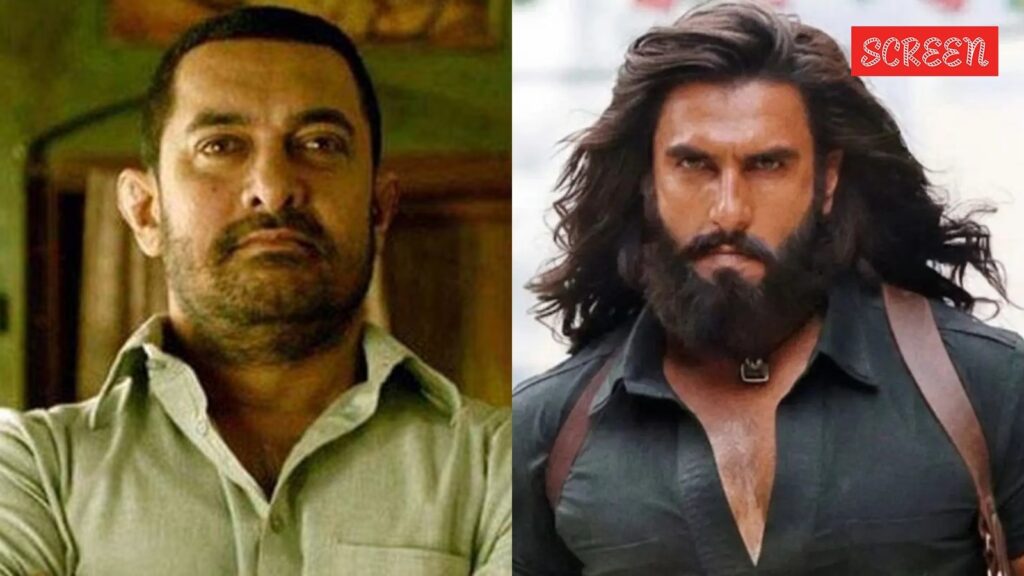
With the sequel now eyeing a release in the Japanese market, industry observers believe there is still room for further growth. If the film performs strongly overseas, it could potentially challenge the lifetime worldwide collection of Dangal, which remains the highest-grossing Indian film of all time.
Story continues below this ad
Currently, Dhurandhar: The Revenge is about Rs 250 crore away from surpassing Dangal’s reported worldwide gross of around Rs 2,070 crore. A successful run in Japan could therefore help the Ranveer Singh-starrer close the gap and potentially rewrite Indian box-office history.