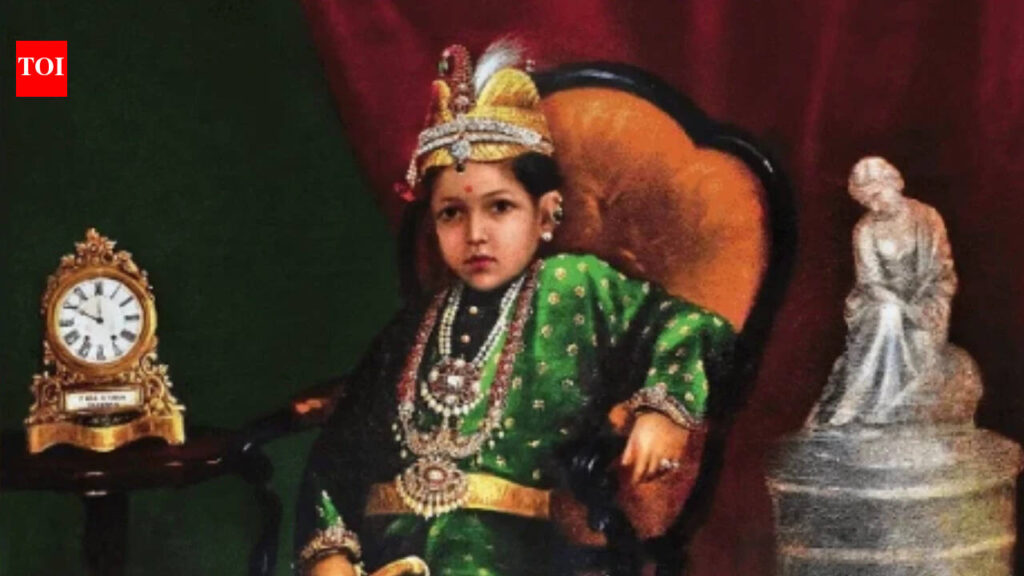
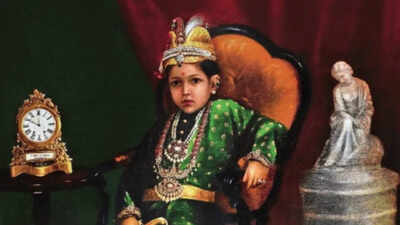
A Raja Ravi Varma portrait from close to 150 years ago that’s coming up for auction today brings alive once more the story of its remarkable subject, Raja Martanda Bhairava Tondaiman of the erstwhile kingdom of Pudukkottai in central Tamil Nadu.A Ravi Varma work, ‘Yashoda and Krishna’, just set the record for the most expensive modern Indian painting when it was picked up for over Rs 167 crore by Cyrus Poonawalla of Serum Institute. Which is why all eyes are on what the ‘Little Prince of Courage’ — as the portrait, made when Martanda was all of 10 years old, is called — fetches when it goes under the hammer. Owned by a private collector, it has a base price of Rs 20 crore in the auction organised by Mumbai-based AstaGuru Auction House.But the painting captures more than just a young royal in all his splendour. It also turns the spotlight on a kingdom ahead of its time, a royal scandal, an extraordinary act of allegiance, and a raja who walked away from it all for his ‘maharani from Melbourne’.
Raja & Rani
Martanda was born in 1875 and ascended the throne, still very much a child, in 1886, says A Manikandan, research scholar at the department of ancient science, Tamil University in Thanjavur. “The British initially supervised the kingdom’s administration. When Raja Martanda assumed full powers, he was a progressive ruler. He introduced electricity, improved roads, launched public health initiatives and created modern civic infrastructure in Pudukkottai. He also established a library, the building that now houses the Government Museum,” says Manikandan.On a visit to Australia in 1915, the 40-year-old “dashing” but single Martanda met the golden-haired “society beauty, with blue eyes and pouting pomegranate lips”, Esme Mary Sorrett (Molly) Fink of Melbourne.The two married that year, say her biographers Edward Duyker and Coralie Younger. But though Molly was received enthusiastically by the people of Pudukkottai, the British refused to recognise the union. There was even an attempt to poison her with ‘arali’ (oleander leaves) when it was discovered she was pregnant. Martanda took Molly to Ooty, but was not allowed permission to buy a house there. The disheartened couple left India. They had a child, whom they named Sydney, but when it became clear that neither would the British acknowledge him as the heir, Martanda abdicated and accepted financial compensation.His grand-nephew, Brahadambadas Rajah Rajagopala Tondaiman, succeeded him as the Raja of Pudukkottai, the dynasty’s last ruler. Martanda died in 1928, aged about 52, and was cremated with Hindu rites in London, after Molly was refused permission to fly his remains to India.
The Dynasty
“What was unique about the Tondaiman dynasty (16861948) was that it created a democratic structure of governance,” says Manikandan. “Even before Independence, they had representative bodies where local leaders, merchants and scholars participated in discussions. They also established a legislative assembly and introduced social welfare schemes. “Faced with drought, they created a scheme similar to MGNREGA.”As the tide of empire turned and the British prepared to leave, the Tondaimans were among the first princely rulers to join the Indian Union.“My father didn’t just accede to the Indian Union; he handed over all the money in the royal treasury as well. The entire Rs 57 lakh,” says Rajagopal Tondaiman, adopted son of Rajah Rajagopala. “He signed the agreement with a gold pen, which he also left behind on the table. When home minister Sardar Vallabhbhai Patel tried to return it, he refused, saying it too belonged to the people of Pudukkottai.”
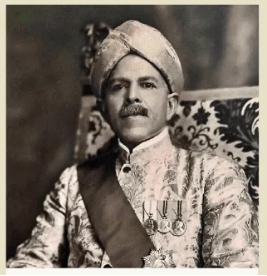
Martanda Bhairava met Fink on a visit to Australia in 1915
The ‘Little Prince’ portrait used to hang at Rajagopal’s mother’s home in Pudukkottai, called the Residency, before it was sold to a private collector. An 1886 Ravi Varma portrait of Rajagopal’s greatgrand-aunt, Janaki Subamma Bai, still hangs in his living room. “Ravi Varma painted her holding a fan. I suppose it was to symbolise the tradition of the queens,” says Rajagopal. “Just as he painted the young Martanda with a clock.”
The Clock
For art historian Ganesh V Shivaswamy, the garish gold European-style clock is what stands out, almost incongruously, in the ‘Little Prince of Courage’. The painting, he says, belongs to the artist’s earlier period. “The brushstrokes are more static and make the work resemble a photograph pasted onto a frame, unlike the fluid brushwork that characterises his later paintings.”
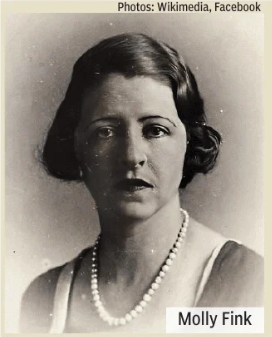
Molly Frink
Shivaswamy says the painting is part of a series of portraits for the Pudukottai Royal Commission, the artist’s first such commission. This is the first time the portrait, 50inx42in, is appearing at an auction. “What makes the painting exceptional is that it captures a child carrying the full ceremonial weight of a dynasty, yet the artist never loses sight of the boy beneath the regalia,” says Sunny Chandiramani of AstaGuru.
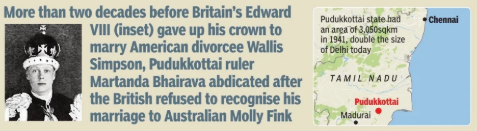
Shivaswamy adds that “the painting may also symbolise the beginning of a cultural synthesis”. “This was a period when Indian princes were wearing European suits, speaking English and bringing modern gadgets into their courts. The clock is the equivalent, in those days I suppose, of having the latest iPhone, a way to signal, ‘I have arrived’.”