
Right when India put its money on Neeraj Ghaywan’s Homebound to fetch international glory at the Oscars, the film was ousted from the race. Weeks after that, a small, sweet film that missed the radar earlier did the job at the British Academy Film and Television Awards (BAFTAs), winning the Best Children’s & Family Film. Helmed by Manipuri filmmaker Lakshmipriya Devi, and starring child actor Gugun Kipgen, Boong beat the likes of Zootopia 2, Lilo & Stitch, and Arco.
Boong is jointly produced by Farhan Akhtar and Ritesh Sidhwani’s Excel Entertainment, Shujaat Saudagar and Vikesh Bhutani’s Chalkboard Entertainment, and Alan McCalex’s Suitable Pictures. As the film re-releases in Indian cinemas this March 6, Shujaat talks to SCREEN about backing the indie, the BAFTAs campaigning process, and reuniting with Farhan, Excel Entertainment, and the North-East nine years after Rock On 2 (2016).

Did you feel FOMO to see only the director and the other two producers — Farhan and Ritesh — on stage receiving the BAFTA?
If you watch it in ultraviolet, you’d see Vikesh and me standing next to Farhan and Ritesh (laughs). No, but it was a very emotional moment. We were humbled by just being nominated, and the victory was the cherry on the cake. It was fantastic to see Lakshmipriya there because it’s her victory, her film. She’s actually captained the entire film towards its rightful culmination.
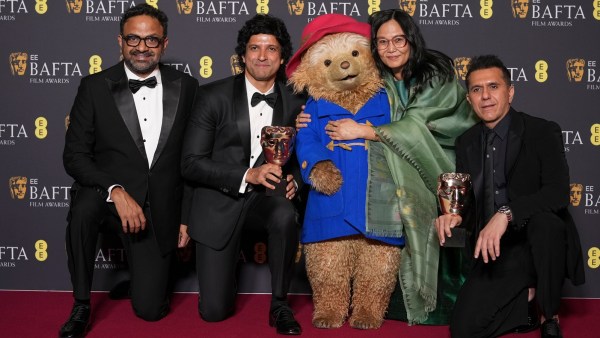 The Paddington Bear presented the BAFTA to Boong.
North-East India isn’t new to either you or Farhan as you directed him in Rock On 2 (2016), which was set there. Did you form a connection with the region back then?
The North-East is really the musical capital of our country, when it comes to the musicians and the rock bands. It’s such a vibrant part of our country. It’s culturally so diverse, yet there’s a unity in them. When we’d gone for the recce then, we heard some music so we literally drove towards that direction. There were six-seven adjacent houses, where everyone was sitting in the verandah and jamming during the monsoon. I’d not seen anything like that before. I felt so unifying. That’s when we knew we were in the right place. It was like having a music festival when we shot the film there. The people were so warm and hospitable. I must say whatever the fate of the film has been, the journey has been extremely emotional for us. We reminisce it even today. We’re still in touch with a lot of musicians from there. They keep sending us their stuff. They’re all doing great.
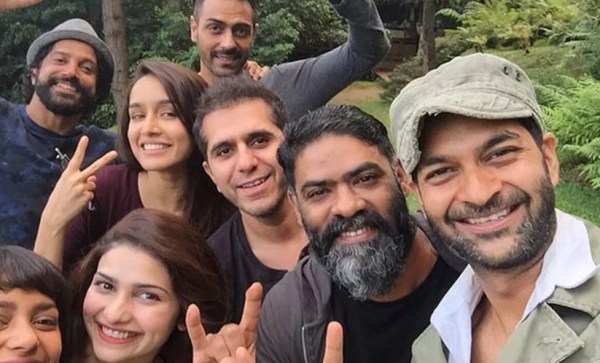 Shujaat Saudagar’s Rock On 2 was a rare mainstream Hindi film to be set in the North-East.
Leading production houses like Excel Entertainment and Karan Johar’s Dharma Productions have backed indie films like Boong and Neeraj Ghaywan’s Homebound respectively last year. Do you think this is a healthy trend?
Story continues below this ad
I don’t think there’s any kind of aversion. It has more to do with accessibility of scripts. Lakshmipriya has been a dear friend, and a collaborator of all of us, including Farhan, for over two decades. Her story really resonated with us. I don’t think there’s a conscious or unconscious approach towards cinema like this. It’s more towards narratives that happen to come to us. Like I did a film in Covid, called The Underbug, with Ali Fazal, which went on to win the Grand Jury Prize at Slamdance.
I can’t talk for others, but I can talk for Excel that there’s never been a bias towards a certain kind of cinema. Even if you look at their OTT spectrum, whether it’s Dahaad or Bambai Meri Jaan (2023), they’re all nuanced narratives. And it’s encouraging to see Dharma back a Homebound. I think the world is shrinking. We had Vikramaditya Motwane and Shaunak Sen back a Sabar Bonda, which was a Sundance winner. It’s a phenomenal film, which is on Netflix now. There’s a lot of movement. Yes, these are baby steps, but five to seven years ago, we wouldn’t have even been talking about these films. The recognition given to Shaunak Sen’s All That Breathes (2022) and Payal Kapadia’s All We Imagine As Light (2024) give producers the impetus to dabble in this kind of storytelling as well.
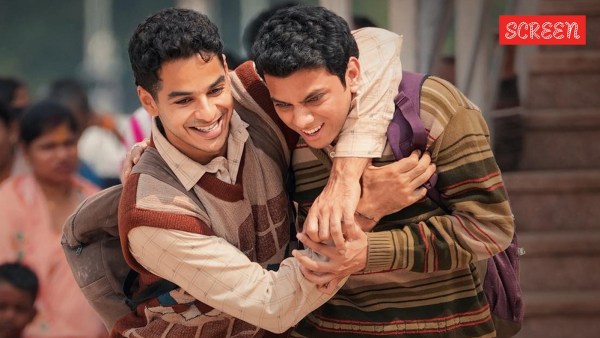 Homebound was India’s official Oscars entry this year.
Were you bummed when Boong wasn’t selected as India’s official Oscars entry last year?
The Oscars entry announcement didn’t really impact Boong’s journey. It first premiered at TIFF (in 2024). It’s had an incredible festival run across North America, South America, Europe, and Asia, winning many accolades. So, we were always on a good turf. Yes, the committee went with Homebound, which is also a brilliant film. But it didn’t thwart our thought process. We just applied for BAFTA, and got to know we were selected for the longlist. That was very encouraging because it didn’t take any marketing or PR initiated by us or Excel. The beauty is that it’s purely been on merit. We did zero lobbying. I have no idea if there’s any lobbying that happens at BAFTAs because we haven’t experienced any at all. It was completely jury-led. Winning against such top-tier, studio-backed films which were also phenomenal is really encouraging. So, we’ve had a pretty good run.
Story continues below this ad
Rima Das’ Assamese film Not A Hero also won a Crystal Bear Special Mention at Berlinale. There’s a tendency to brush all states from North-East India with the same brush. How do you react to that gap in perception?
The gap has always been existent because we’re such a vast nation. It’s only in the last five years that actors and films from South states have started getting recognition in the Hindi land. That’s because the world has shrunk post Covid. Everyone at home had access to content across the globe. There were people sitting in office watching Mission: Impossible in Tamil. They know what a Tom Cruise does. So, it’s a global phenomenon. There was an accessibility issue earlier. The familiarity between different states and cultures is not going to happen overnight. But what’s really encouraging is that it’s moving in a positive direction. Rock On 2 was a brave step in mainstream cinema to go to the North-East because we wanted to be authentic to the music culture of the country in that genre.
Also Read — ‘If I go to Iran, they will kill me’: Elnaaz Norouzi on Khamenei’s death and the ‘liberation’ of her homeland
Some of the best films the world has seen have addressed tough issues, but from a child’s point of view, from Life’s Beautiful (1997) to Jojo Rabbit (2019). Do you think that’s also what’s worked in favour of Boong?
Story continues below this ad
What the story does essentially is talk about fearlessness. As a child, you don’t have inherent fear. But if the mother is scared of lizards, the child would be too. That’s part of social conditioning as we grow up. For me, that aspect of the script was really fantastic and resonated mostly on a personal level. Children don’t have filters, so there’s no fear of questioning. And sometimes, that feeling can be the most beautiful. Had it been an adult, they might not have gone on this journey to look for their father. But this kid follows his heart and gut, unfearful of any consequences.