
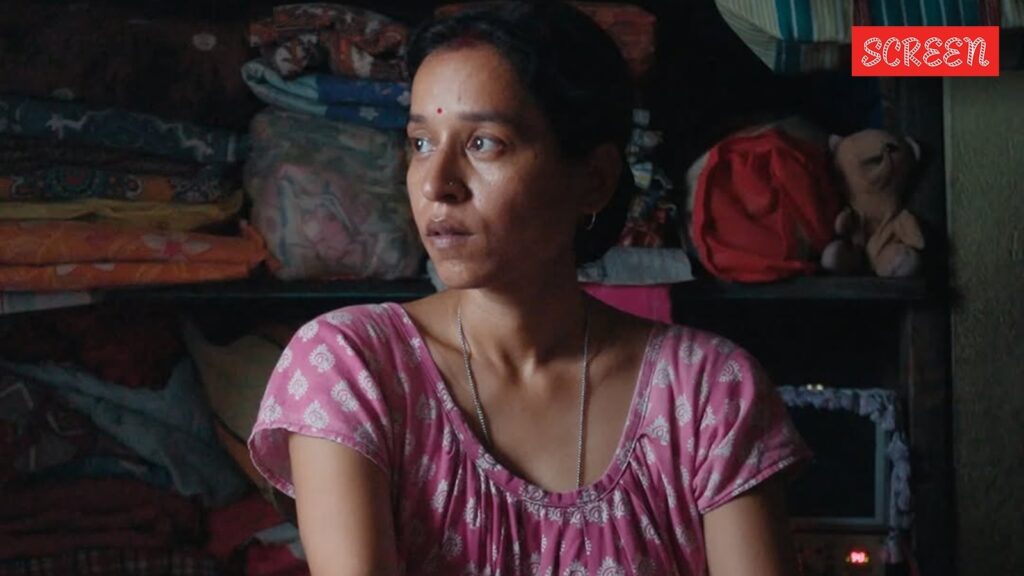
Baksho Bondi movie review: There’s a moment in director duo Tanushree Das and Saumyananda Sahi’s Baksho Bondi (Shadowbox) where an exhausted Maya (Tillotama Shome) sits near the railway crossing not far from her home. It’s her usual spot where she spends some “me time” every day, reading the newspaper. But it’s different this time, as she has reached there after spending the whole morning searching for her husband, Sundar (Chandan Bisht), who has been missing since the previous night. Just then, a familiar elderly person approaches Maya to inform her that the police are looking for her and that they have found a body, suspected to be that of her husband. A pall of gloom descends on her. One can almost see shock and sorrow, along with a bit of guilt, filling her face second by second. She goes numb for a moment, and then her eyes well up. Slowly. It’s not just the grief over losing a loved one that you can see in her pale face, but also this unfair sense of “I didn’t do enough,” despite having done more than anyone in her place would have over the years. Having watched the movie so far, you also know that the thought of her family badmouthing Sundar, whom they don’t respect at all, might also be plaguing her mind. She clenches forward, almost like someone has hit her in the gut. She sobs but with restraint. Her mind doesn’t want to accept the tragedy, but her heart isn’t listening; it keeps wondering, what if it’s actually true? What if Sundar is no more?
Story continues below this ad
This, I would say, is just one among the many powerful moments in Baksho Bondi, which was recently screened at the 30th International Film Festival of Kerala (IFFK), where Tillotama Shome knocks it out of the park. Although their social and educational backgrounds differ, Maya shares certain similarities with her character, Ratna, from Sir (2018), particularly in terms of their living conditions and the sheer number of responsibilities they both have. Yet, not even once does the shade of Ratna creep into Maya, even unconsciously, and that is something easier said than done. In the very first scene, we see Maya quickly complete her household chores and step out with her bicycle, which is almost a part of her self throughout the movie. It’s her BFF, one could say. The rhythm with which Maya handles and rides it across her hometown of Barrackpore, a Kolkata suburb, delivering ironed clothes to various households — one among the many jobs she does as the only earning member in her family — serves as a testament to Tillotama’s observation and understanding of life at the grassroots level.

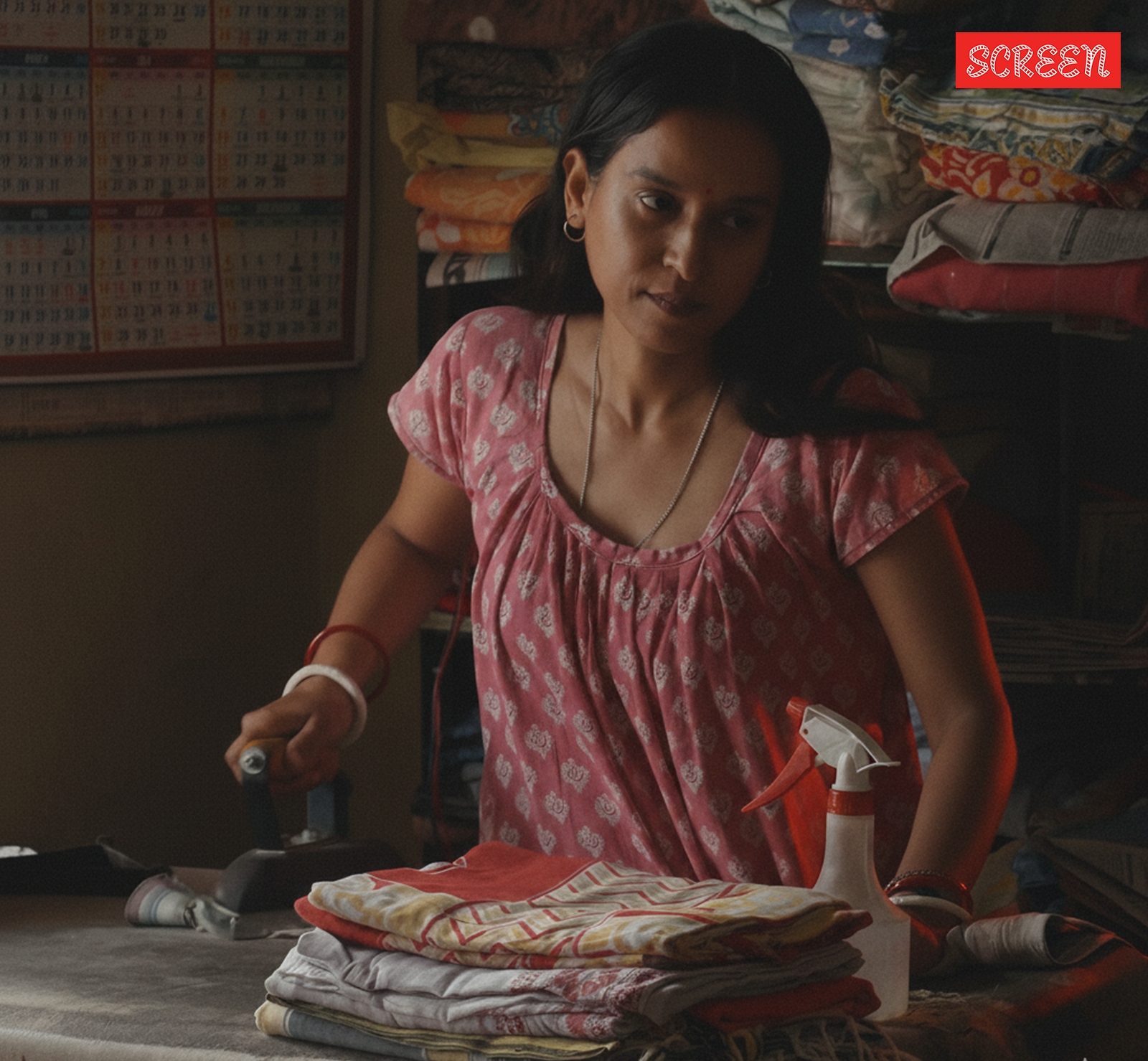 A still from Baksho Bondi.
One of the brilliant aspects of Baksho Bondi is that it isn’t just another poverty-porn movie shamelessly offering pity-based storytelling. Tanushree and Saumyananda ensure that there isn’t an elite gaze that leeches off the sufferings of the destitute. Instead, from start to finish, Baksho Bondi has its focus firmly set on the lives of Maya, Sundar, and their only son, the school-going Debu (Sayan Karmakar). While Maya runs the entire household by working multiple jobs, including as a domestic worker for an elderly couple and as a helper at a poultry farm, Sundar is a retired soldier suffering from Post-Traumatic Stress Disorder (PTSD). These days, he loiters around, catching frogs from nearby areas to give them to science labs. Scared that he will be attacked at any time, Sundar is petrified to sit alone in even a salon. Hence, Debu is often left to care for his father, and is almost always embarrassed by his actions, which make him a laughingstock at school as well. Even though Maya has been running from pillar to post to ensure that Sundar gets a decent job so they can lead a better life, he is anything but interested, for reasons within or beyond his control.
Story continues below this ad
At one point, she takes him to a school herself to see if they can find him a job. During the conversation with the principal, Maya does all the talking, explaining Sundar’s skills and why he would be a good fit for the sports department. One can see the desperation in Tillotama’s eyes and body language, as well as the shades of PTSD in Chandan’s. In another scene, when a neighbour woman is yelling at Sundar in front of their house for accidentally entering her washroom in search of a frog while she was taking a shower, Maya walks out and guides him back into their home without saying anything, preventing others from picking on him. Even though a sense of fatigue is always there within her, she never stops marching ahead, as there is no other option, nor does she stop being the shield that protects her family.
Story continues below this ad
(Spoilers ahead) Upon learning that it’s not her husband’s body that the police found but that of a local drunkard, with whom Sundar used to spend a lot of time drinking, Maya immediately shifts into protector mode. Without an iota of scepticism, she begins fabricating stories in front of the police to ensure her husband’s protection. Although her actions reveal she isn’t very good at lying, she does go the extra mile for her family. In a way, she is Drishyam’s (2013) Georgekutty (Mohanlal) minus the “knowledge” and “classic criminal” mind acquired through watching movies. Yet she is also not ready to gamble with her family’s future by covering everything up. When Sundar returns a few days after going missing, following the discovery of his friend’s body, a desperate Maya tells him to surrender so that the law is lenient on him, especially considering his Army background and current mental health struggles. Although Baksho Bondi had enough at its core to be a bigger, gripping thriller, Tanushree and Saumyananda don’t venture into such territory and cleverly sidestep the pitfalls that would have otherwise rendered it yet another casual family thriller.
At the same time, Baksho Bondi is also an incredibly layered work that touches upon a multitude of themes, subtly yet impactfully. For instance, it brilliantly portrays class differences and elitism through a conversation between Maya and the elderly woman at whose house she works. When she approaches the woman asking for advice on which coaching centre she should enrol Debu in, the woman bluntly says that such things are expensive and that she would be better off teaching him some skills, like driving, which would help him get a job quickly. What makes this scene even more brilliant is that it’s not direct. The patronising manner in which the elderly woman tells Maya this underscores how casually and nonchalantly classist and casteist behaviours work.
Maya’s relationship with her seemingly well-off brother is also a very intriguing aspect of the movie. Although he isn’t portrayed as an outright evil person, his actions towards her underscore his insecurities about having grown up with a more accomplished, educated sister. Every time he extends a helping hand to Maya or Debu, we can see the ego boost he gets from it. At the same time, Debu’s relationship with Sundar is also very fascinating. Although there are moments when one can see that he has a soft spot for Sundar, Debu is mostly cold towards him, since he brings him much embarrassment. While this shows that he is yet to be sensitised towards mental health problems, his mindset towards Sundar changes suddenly when he lands in the police net, and we even see the kid shedding tears for his old man.
Story continues below this ad
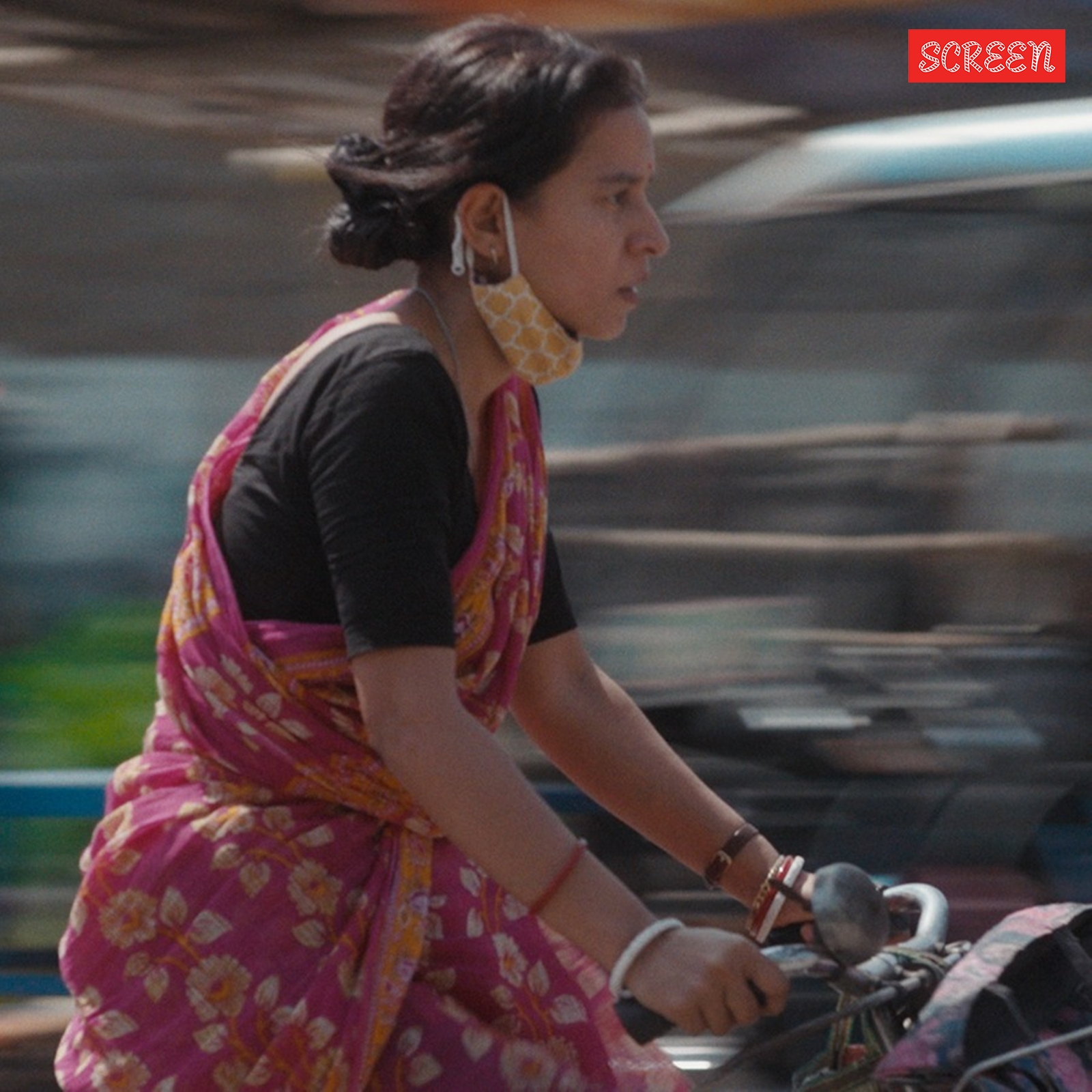 A still from Baksho Bondi.
From a shot highlighting the street dog menace in the area to the way spaces are used across the movie, particularly Maya’s home, Tanushree and Saumyananda’s eye for detail and expertise in the “show, don’t tell” technique are visible throughout Baksho Bondi. For instance, we never get to know what incidents contributed to Sundar’s PTSD. Why does Maya’s family pity her so much, and why is her mother extremely indifferent to her and loathes Sundar? We don’t know. Did Sundar actually commit the murder? We may never know, as the incident is only mentioned and never shown, and the directors aren’t interested in telling us either. I mean, does the truth even matter in a country where the marginalised are almost always the suspects in most cases and are eventually implicated, even if innocent?
Even while leaving so much unsaid, the director duo doesn’t make us feel like there’s a gap in the narrative, as everything is so well tied and the arcs are perfect. The last two conversations between Maya and Sundar — one where words duel and the other where they compassionately let each other know that this too shall pass — are nothing short of extraordinary and fine examples of brilliant dialogue writing, elevated by masterful performances. The same can be said about the scene where Maya lashes out at Debu towards the end.
Also Read – Oru Apasarpaka Katha: A trippy time-loop dark comedy that’s highly entertaining despite its flaws
Story continues below this ad
While Baksho Bondi mainly uses ambient sounds, and music appears only when necessary, the makers ensure there is a rhythm in everything and that no aspect overshadows the other. Since they know the movie inside out, I think it was the best decision for Saumyananda Sahi to handle cinematography and Tanushree Das editing. I wonder if anyone else would have managed to capture the ethos of the narrative, characters, and Barrackpore the way they did. Chandan Bisht and Sayan Karmakar also deserve immense praise for their extraordinary performances, as do production designer Mausam Aggarwal, sound designer Gautam Nair, and composers Benedict Taylor and Naren Chandavarkar.
Baksho Bondi movie cast: Tillotama Shome, Chandan Bisht, Sayan Karmakar
Baksho Bondi movie director: Tanushree Das, Saumyananda Sahi
Baksho Bondi movie rating: 4.5 stars

Click here to follow Screen Digital on YouTube and stay updated with the latest from the world of cinema.
© IE Online Media Services Pvt Ltd