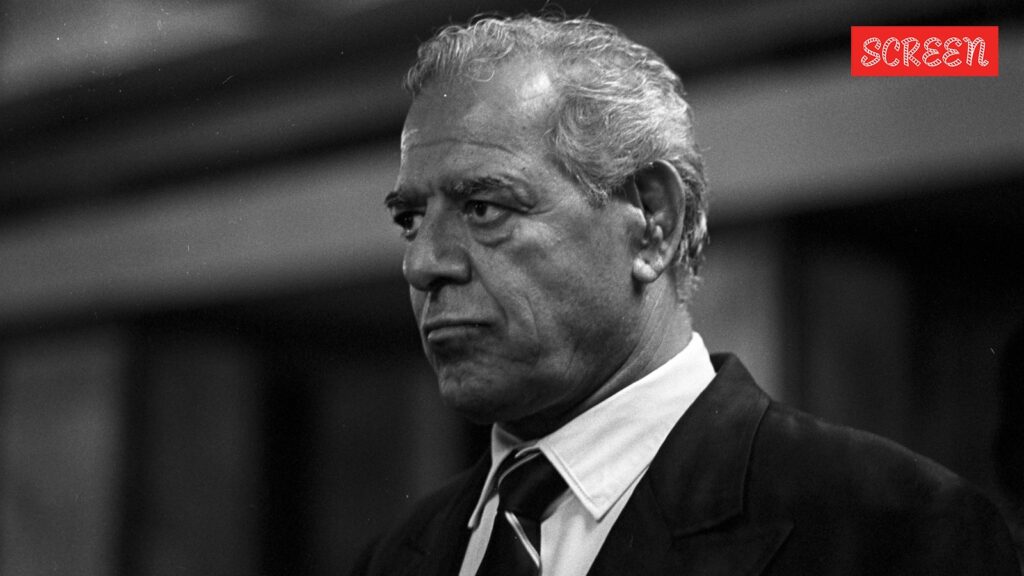
The Emergency era, which started in 1975 and ended in 1977, was one of the darkest chapters of the country since it gained independence in 1947. The freedom of the press was severely restricted, and the entertainment industry also bore the brunt of the same as many films, and songs, which seemed to question the ruling government or were not in alignment with their politics, were banned.
While some actors and directors like Kishore Kumar and Dev Anand were vocally opposing the government, others like Manoj Kumar ended up suing them. Films like Aandhi were caught in the crossfire, and the likes of Sholay had to accept the changes issued by the CBFC if they wanted to secure a release. During this phase, veteran actor-filmmaker Dara Singh, also suffered heavy losses as his Punjabi film, Sawa Lakh Se Ek Ladaun, was banned after its release, and he lost over Rs 35 lakh (around Rs 10 crore in 2026, adjusted for inflation).

‘Unnecessary controversy’ around Dara Singh’s film
In the film, Sawa Lakh Se Ek Ladaun, which was also directed by Dara Singh, he was playing a Hindu man named Kartar Singh, who converts to Sikhism, and joins the rebel Sikh army that is fighting against the Mughal army. Dara was on a hit streak with his Punjabi films in those days, and did not expect that there would be a controversy around his film. However, while he was still shooting the film in 1975, Emergency was imposed, and when the film was up for release in 1976, it landed in massive trouble.
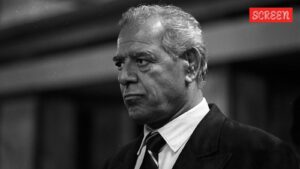
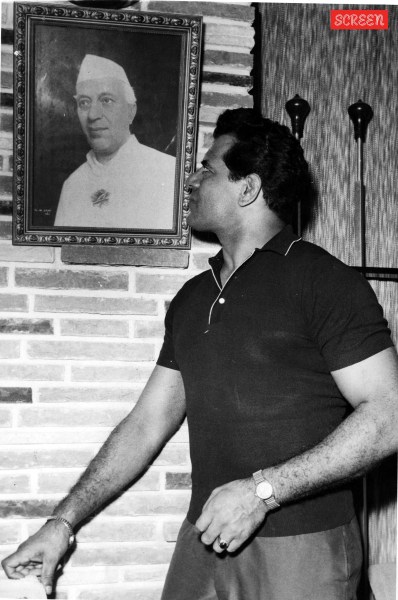 Dara Singh was a Congress loyalist before this incident. (Photo: Express Archives)
In his autobiography, Dara Singh recalled this episode and the “unnecessary controversy” that followed. “We showed how the Sikh community faced a lot of problems, and how Hindu men would fight for Sikhs. In fact, in Hindu families, at least one boy would become Sikh and join the army. We tried to show the same in this film, how Sikhs would protect both Hindus and Muslims. Their mission was to fight for justice for poor and helpless people and fight against oppression,” he wrote.
Rajesh Khanna, Neetu Kapoor’s cameos in the film
The film was initially titled Raj Karega Khalsa but sensing some opposition, Dara Singh changed the title to Sawa Lakh Se Ek Ladaun, a title inspired by the teachings of Guru Gobind Singh. However, that didn’t help much. After Indira Gandhi declared the state of Emergency in the country, the local Punjab leaders decided to oppose the film. Dara Singh, who had been a Congress loyalist until then, was caught in the middle of these warring political ideologies.
At first, Sawa Lakh Se Ek Ladaun, which had cameos by the likes of Rajesh Khanna, Neetu Kapoor, among others, received its censor clearance in 1976, and opened to a strong response in Punjab. But just two days after the release, Giani Zail Singh, who was the Chief Minister of Punjab at the time, and later served as the President of India, asked to see the film.
Story continues below this ad
Dara Singh and Giani Zail Singh’s families were quite close, and the two also shared a warm friendship. After watching the film, Giani Zail Singh suggested a few changes. He asked Dara to remove the dialogues talking about corruption in the government, even though the film was not set in the 1970s. A few other changes were suggested too, and Dara Singh complied. But Giani Zail Singh wasn’t satisfied with the film, and feared that this could cause riots, and become a political issue.
ALSO READ | Amitabh Bachchan, Govinda’s inspiration, Bhagwan Dada went from ‘millionaire to pauper’
Dara Singh’s Rs 35 lakh invested
As per Seema Sonik Alimchand’s book Deedara aka Dara Singh, Giani Zail Singh then asked Dara Singh to change the colour of the pagdis worn by the Sikh characters in the film from blue to white. When Dara Singh explained that he would have to reshoot most of the film to change the colour of the pagdis, Giani Zail Singh wondered if it would be too expensive. “Yes. If I re-shoot, I will lose a lot of money,” said Dara Singh as he had invested close to Rs 35 lakh on the film, making it one of the most expensive Punjabi films until then.
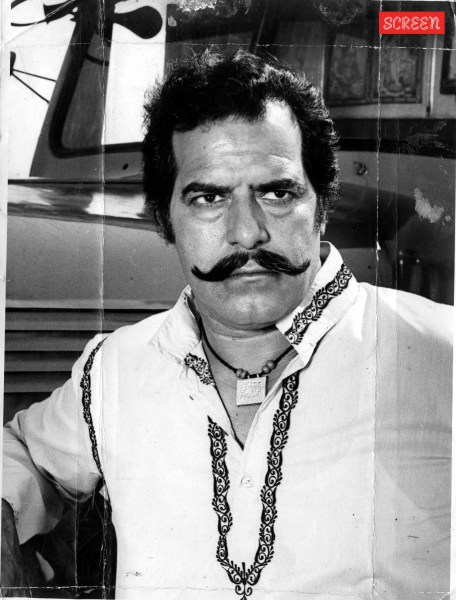 Dara Singh had invested a large sum in the making of the film. (Photo: Express Archives)
A few days after this, Baba Santa Singh, who was the chief of a sect called Budha Dal called for a ban on the film. Reportedly, he addressed a meeting where he questioned, “How can Dara Singh play a Jathedar with his shorn tresses?” This was only the beginning of Dara Singh’s troubles.
Story continues below this ad
‘Beware all, there will be riots’
When Dara Singh went to see Santa Singh to explain the motive behind his film, he was told, “If this sanctimonious film is allowed to release, beware all, there will be riots; there will be bloodshed.” When Dara Singh pleaded that he must watch the film as it was “for the Sikhs, not against them”, Santa Singh roared back, saying, “I don’t watch films.”
As Giani Zail Singh had predicted, the film was now in deep trouble and was taken off the screens. Dara Singh, who was one of the most renowned celebrities of Punjab, sought help from the Akali Dal as he had invested his own hard-earned money into the film. He was told that instead of releasing the film with pomp and show, he should try and release it district-wise, starting with one of the smaller districts. The intention was not to make any noise around the release and hope that if it gets appreciated by the audience, the leaders might see reason.
Santa Singh’s opposition and a two-year delay
Almost two years after securing the CBFC certificate, the film was released in the Hoshiarpur district, but even then, the screening was disrupted by Santa Singh’s supporters. Dara Singh appealed to them to watch the film and since this was a smaller group of men, who were awed by the grace of Rustom-e-Hind, they stayed back. Santa Singh was furious after this, even as his supporters said that there was “nothing offensive” in it. The next week, Dara Singh released in another district and managed to get it released in four districts. Shortly before it was to release in Amritsar, Santa Singh began his protest against the film.
Story continues below this ad
Police officials of the city warned Dara Singh and told him that they were sensing unrest. “I’ve received a message from the protestors. There are going to be riots,” he was told by the Director General of Punjab Police. But Dara Singh was quite positive and hoped that just like the other four districts, he would win over the people after they watched his film.
On the day of the release, the protestors came face to face with the supporters of Dara Singh, and the actor, in that moment, realised that there was no way he could reason with a mob, and so, the screening was cancelled, and with this, Dara Singh accepted defeat against the political machinery.
Sanjay Gandhi’s intervention led to the film’s release
However, a few years later, in 1979, during a chance meeting with Sanjay Gandhi, Dara Singh sensed a window of opportunity and brought up the ban on his film. Giani Zail Singh was also present here and as Sanjay heard this, he turned to the Singh and said, “Gianiji, Yeh kya ho raha hai? Inki picture lagni chahiye (Gianiji, what’s going on? His movie should be released.)”
Story continues below this ad
Since Sanjay was known to make the film industry dance to his tunes, the film was finally able to secure a release, and this time, without any opposition. After Dara Singh secured a release, he even got an apology letter from Santa Singh for trying to obstruct the release. Even though the film made some money, Dara Singh could not earn all that he had invested.