Jeo Baby’s Ebb movie review: There aren’t many filmmakers in Malayalam cinema, or perhaps in India itself, who expose male hypocrisy the way Jeo Baby does: brutally, uninhibitedly, and astutely. His latest feature film, Ebb, which premiered at the 30th International Film Festival of Kerala (IFFK), is yet another example of this. However, this time he has opted for a far more raw portrayal and has ensured an exploration of its psychological dimensions as well, along with the social conditioning that contributes to it. At the same time, the movie also anatomises the concepts of monogamy and non-monogamy, their practical implications, and, to an extent, performative wokeness, too.
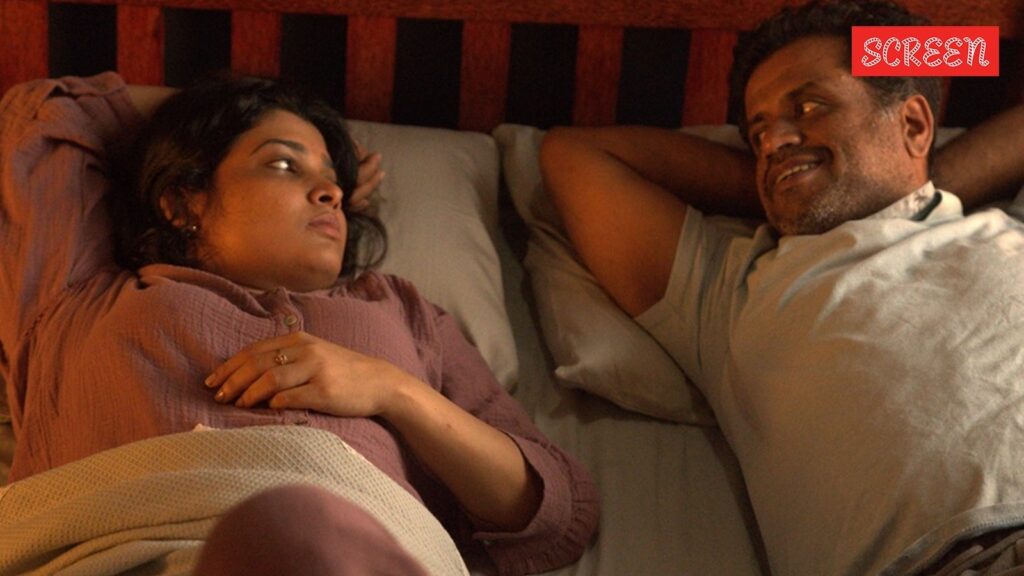
Known for his artworks and ‘nonconformist’ mindset and lifestyle, Adarsh (Jeo) lives in an apartment with his partner, Maria (Divya Prabha). Despite being head-over-heels in love with each other, they are in an open relationship and have other partners as well. Although she was initially not okay with Adarsh’s non-monogamous lifestyle, it is revealed that Maria eventually came to terms with it — thanks to Adarsh himself, who ‘educated’ her on its positive sides — and is now in a parallel relationship with a man named Sidharth (Jitin Puthanchery). Yet, she has no shame in admitting that she is possessive about Adarsh, while he pretends to be above such mortal feelings.

One day, during a private moment, Adarsh reveals to her his fantasy of having a threesome and suggests asking Sidharth if he is interested. When Maria expresses scepticism, the ‘broad-minded’ Adarsh claims that his happiness stems from seeing her happy, even if that involves another person in the dynamic. Though in the opening scenes, Sidharth is portrayed as harbouring a feeling of guilt over maintaining a secret relationship with Maria, since he’s a married man, the idea of a threesome intrigues him. During the act, however, witnessing Sidharth satisfying her more than he does strikes a nerve in Adarsh’s mind, leaving him unable to perform well. As time goes on, sexual problems become the norm for him, and he is unable to be intimate with any of his partners. This marks the beginning of troubles between Adarsh and Maria, compounded by his realisation that she has romantic feelings for Sidharth as well, just as she does for him.
Much of Ebb unravels through high-angle shots, with the camera cleverly placed above different beds. While it’s known that people unleash their raw, unfiltered selves at home, where the power dynamics set up by the patriarchal structure of family also come into play, Ebb goes further, into the bedrooms, where people shed all their pretences and masks, exposing their true natures. Yet, even there, Adarsh mostly exhibits his public persona. He lectures his partners about his unconstrained life and, in a way, boasts about it, attaining satisfaction when they express respect for him. One can sense the narcissistic pleasure he feels when his partners, including Maria, admit that “not all can be like Adarsh.” However, Jeo offers moments when Adarsh’s pretence comes undone, as he shows off the picture of his new girlfriend to his bros, the men who celebrate his free-spirited life the most. Although the movie doesn’t explicitly mention it, it becomes clear that he takes pride in being a ‘playboy,’ and that’s all he cares about since he doesn’t maintain an intimate connection with anyone other than Maria.
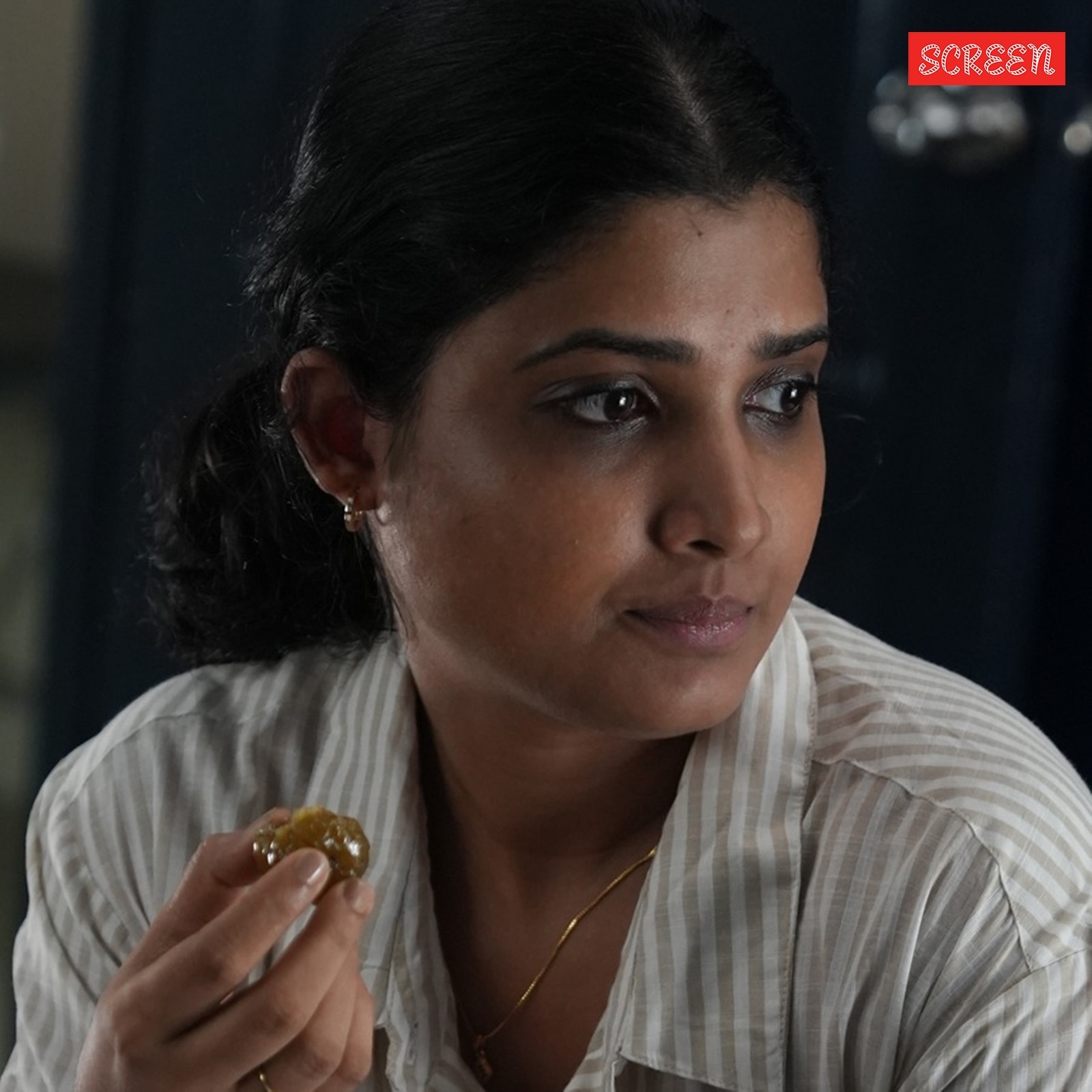 Divya Prabha in Jeo Baby’s Ebb.
However, her case is a bit different. Maria is emotionally tied to Sidharth, just as she is with Adarsh. Not only does she sense when his mood is off, but she even sends a kiss as a voice note when Sidharth sends her a picture of his toddler, underscoring that her feelings for him are not just physical. While Adarsh practices non-monogamy for pleasure, and maybe so that he isn’t labelled a “cheater,” Maria dives into the depths of it while remaining true to her feelings for both men. Even when Adarsh starts expressing insecurities about her secondary relationship, she doesn’t outrightly dismiss his feelings and instead suggests ways to work through them. However, for Adarsh, the impotence starts to feel like a threat to his manhood, and he begins blaming her for it, despite being the one who initiated it all. Soon, he starts gaslighting and manipulating her, and even laments to one of his bros that he is heartbroken over her having an affair.
Nonetheless, Jeo doesn’t treat it solely as male hypocrisy; he delves into the psychological factors at play as well, unravelling how years of social conditioning — particularly the instillation of a penchant for monogamy — affect a person. When the camera descends from the top-angle to the surface, the picture becomes clearer, and the shades of grey more pronounced. While shedding light on people’s fear of losing [control over] a loved one and their inhibition to share what they cherish most, Ebb also explores the mental derailment these fears can cause. Even without resorting to violent portrayals, Jeo manages to convey the mounting tension, which deserves commendation. In a way, the movie also problematises people’s — particularly men’s — overt obsession with sex, and how it can affect someone’s mental health, character and even identity when their sexual performance is compromised.
Story continues below this ad
Only in SCREEN | Dileep’s downfall: How the 2017 Kerala actor abduction and assault case accused dug his own grave in cinema and real life
It’s not just his character through whom Jeo has anatomised male hypocrisy. Upon realising that Adarsh is making an issue out of Maria’s relationship with Sidharth and that he is behaving frighteningly, Sidharth’s greatest fear is the repercussions of his wife learning about it, and not a bit about Maria. After opening up about everything, when Maria asks for a compassionate hug from him, Sidharth merely caresses her hand, unveiling another side of his character.
Although Ebb magnificently dissects human emotions and psychology, to an extent better than Jeo Baby’s previous directorial ventures, the movie’s technical aspects fall short. While cinematographer Benhar Bhasi deserves praise for his work, capturing the nuances and intensity of the characters and moments with precision even in limited spaces, Ebb’s visual language seldom goes beyond mere picturisation of the narrative. One of the biggest strengths of Jeo’s The Great Indian Kitchen was the way he staged each scene, extracting the best from the moments through striking visuals. In Kaathal – The Core, on the other hand, the frames evidently communicated more than intended. However, in Ebb, this doesn’t happen often; instead, the viewer is expected to read into the movie more actively, rather than having the movie reach their psyche on its own, thereby creating an organic curiosity to analyse. Certain visual metaphors, particularly towards the end, also fail to do proper justice to the overall narrative, coming across more as performative than truly symbolic.
Story continues below this ad
Both Jeo Baby and Divya Prabha deliver strong performances, bravely portraying everything the movie demands, which many other actors might hesitate to do out of concern for their image. However, Jeo’s dialogue delivery sometimes comes across as contrived, almost to the point where it seems impossible to believe that he himself wrote the screenplay. Divya, on the other hand, could work on her diction, as there are moments when her line delivery doesn’t fully match the intensity of the scene, which her expressions and body language convey beautifully. Jitin Puthanchery, meanwhile, deserves praise for a job well done.
Ebb movie cast: Jeo Baby, Divya Prabha, Jitin Puthanchery
Ebb movie director: Jeo Baby
Ebb movie rating: 3.5 stars