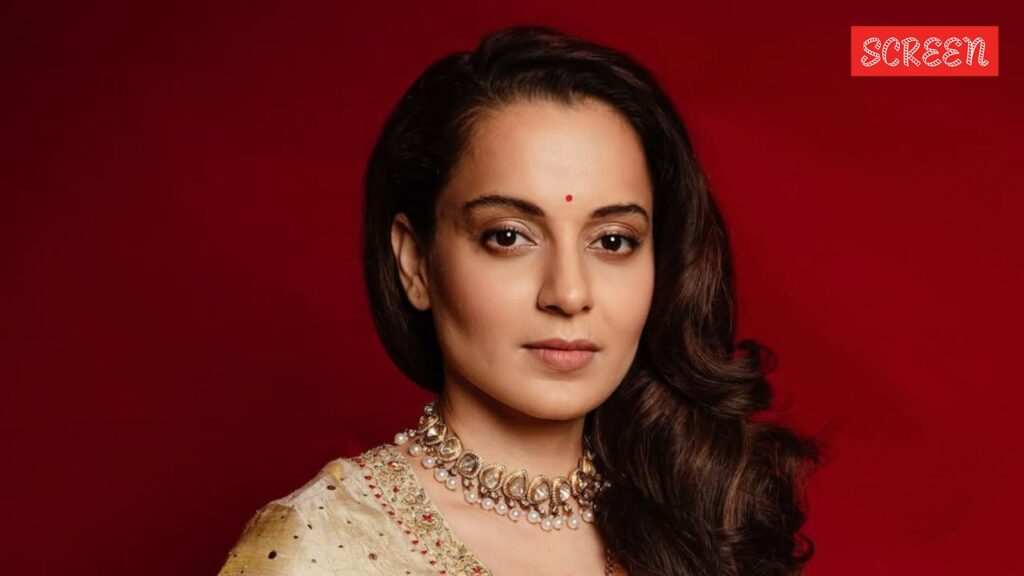
When Kangana Ranaut burst onto the scene with Gangster and later impressed audiences with films like Life in a… Metro, she was hailed as a refreshing new talent with remarkable acting prowess. Over the years, she showcased her versatility with Fashion, cemented her place among Bollywood’s finest performers, and then completely changed the game with Queen. Following the success of Queen, Kangana largely gravitated towards female-led films, choosing roles that gave her characters depth, agency, and individuality. While some of those films found critical and commercial success, others struggled at the box office, often prompting questions about why she continued to pursue such unconventional projects. Now, the actor-politician has finally explained the reasoning behind her choices.
‘Movies were looked down upon in our household’
In a recent interview with Pen Movies while promoting her upcoming film Bharat Bhagya Vidhata, Kangana Ranaut, along with co-stars Girija Oak and Smita Tambe, reflected on the importance of awards and recognition in her life.

“Awards mean a lot to me, largely because of the background I come from,” Kangana said, adding, “I belong to a small village and was raised in a very different environment. My parents would literally throw away newspapers carrying film-related content. We came from an academic and political background. My grandfather worked with the Khadi Board, and my great-grandfather was an MLA. Movies were looked down upon in our household.”
She explained that during the 1990s and early 2000s, the film industry often carried a negative image, making it even harder for her family to accept her career choice.
“Back then, the film industry wasn’t considered very respectable. My parents consumed all the negative news linking films to the underworld. Even after I became successful, I once asked my mother to come and live with me because I felt lonely. She simply said, ‘You chose this life, now figure it out yourself.’ They were never comfortable with my decision to join films.”
‘My father had no reaction after watching the film’
Kangana Ranaut further recalled being particularly hurt by her parents’ reaction after watching Gangster.
“My father had no reaction after watching the film. My mother’s response was, ‘Our society won’t accept this. You are underage and have done all kinds of scenes.’ I was heartbroken. Out of everything in the film, that was all she noticed. They were more worried about society than my performance.”
Story continues below this ad
That experience led her to stop seeking validation from her parents.
“I decided that day I would never take reviews from my parents seriously. But when Mr Bachchan wrote me a beautiful letter praising my performance in Queen and other films, I realised something. My father would never be able to view my work through the same lens as someone like Amitabh Bachchan because cinema simply wasn’t his world. I couldn’t hold that against him.”
‘Awards changed everything’
According to Kangana Ranaut, things began to change after she received national recognition.
Story continues below this ad
“When I won a National Award, my parents were genuinely happy. They felt proud that their daughter was being honoured by the President of India. That was a turning point for my father. And when I received the Padma Shri, it became even more significant. He couldn’t believe that someone could achieve such recognition through films.”
Those experiences ultimately shaped the kind of career she wanted to build.
“Coming from such a conservative background, I made a conscious decision not to do item numbers and instead focus on films that spoke about women, empowerment, and individuality. I wanted to be worthy of my lineage. I constantly questioned myself and my choices. I knew I didn’t want to be reduced to a two-minute role.”
‘My parents were very critical of my work’
Kangana clarified that she was not judging anyone else’s choices, but acknowledged that one’s upbringing inevitably influences one’s decisions.
Story continues below this ad
“I’m not saying something is right or wrong. But our surroundings shape us. My parents were so critical of my work that I was always driven to prove that I was no less than anyone else. No one—whether society or even my own family—could make me feel small. That is why I gravitated towards a different kind of cinema.”
Kangana concluded by drawing a distinction between personal freedom and professional choices.
“I can wear whatever I want. That is my personal choice. But I don’t want to do item numbers, and that choice should also be respected. Awards and recognitions sometimes help punctuate things. They have silenced many critics in my family and society.”
Over the years, Kangana Ranaut has remained one of the few mainstream actresses to consistently headline women-centric films. Whether those choices translated into box-office success or not, she says they stemmed from a deeply personal desire—to earn respect, not just as an actor, but as someone who stayed true to her convictions.