7 min readMay 28, 2026 08:17 AM IST
In 2025, The Handmaid’s Tale finally came to an end after a painfully long run of six seasons. Those who managed to watch it all will know how particularly boring and repetitive those last few seasons were with June (Elisabeth Moss) going in and out of Gilead (the dystopian totalitarian regime run by men) as she pleased, as the viewers waited for her to actually reunite with her long lost daughter, Hannah. In case anyone remembers, that was her mission when she first started her rebellion.
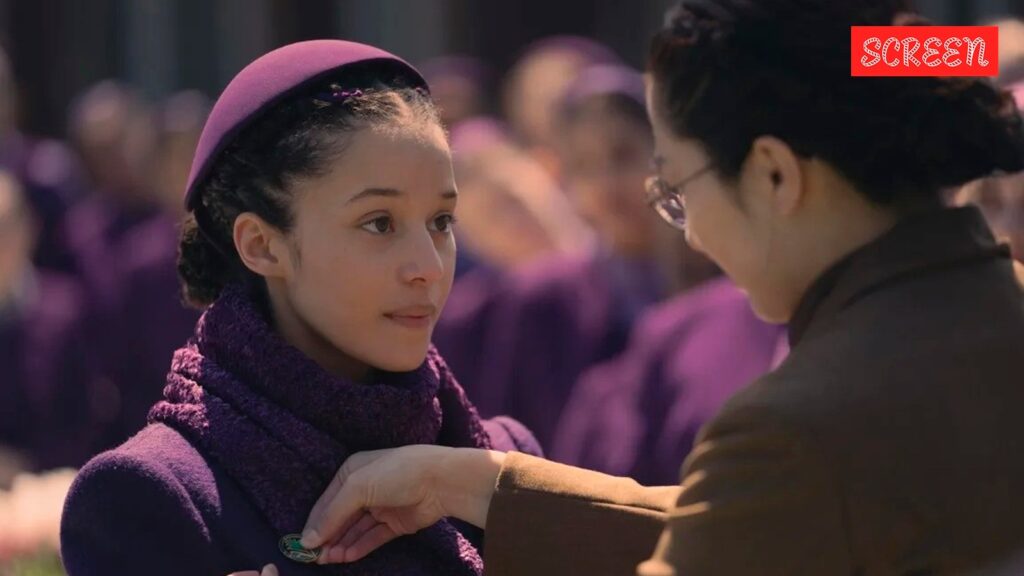
As the seasons went on, the missions kept changing, and June found smaller wins, Hannah became a haunting memory, as it reminded her that despite all the good she had tried to do, she had failed on her biggest mission. In The Testaments, which begins four years after the events of The Handmaid’s Tale, Hannah is at the center, but she isn’t the same anymore; she is now known as Agnes (Chase Infiniti). With no memory of her birth parents, she is now a privileged prisoner in the golden cage of Gilead, who is yet to find out that she needs to break out of this dystopian society, which relies solely on male supremacy, where women are valued only for their reproductive abilities.

The Testaments carries forward the same problems of The Handmaid’s Tale
Back in 2017, the first season of The Handmaid’s Tale established the world of Gilead in such detail that it could give one nightmares. The following season held on to that promise, but as the show went on, it became overindulgent, tedious and somehow normalised the unspeakable horrors that scandalised the viewers at first. The Testaments has the same problem; it wants to scandalise you every step of the way, but nothing shocks you anymore, for you have seen, or at least imagined it all in the previous show.
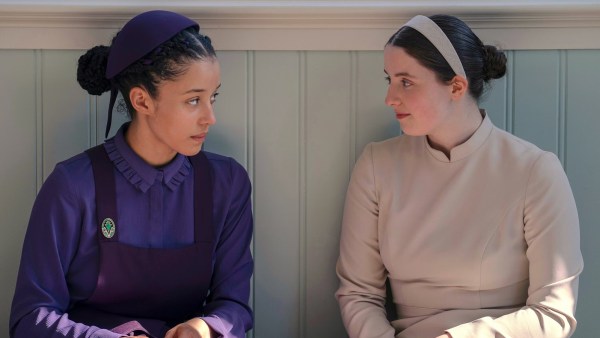 Chase Infiniti and Lucy Halliday in The Testaments.
Unlike its prequel, this show is a teen drama set largely in a ‘school’ run by Aunt Lydia (Ann Dowd) where girls are taught to fall in line and become homemakers and wives. They are conditioned to believe that being a wife and making babies is what will bring them fulfillment, and those who can’t fulfill ‘God’s will’ are just a waste of space.
No points for guessing that love doesn’t stand a chance here, and homosexuality is not even talked about openly. The conditioning is such that girls are taught to blame themselves when someone sexually harasses them and much like the regular world, it is often brushed under the carpet.
Agnes and her group of friends – Becka (Mattea Conforti), Shunnamite (Rowan Blanchard) and Hulda (Isolde Ardies) – are trained to be identical and invisible, but apart from their plum uniforms, these girls have nothing in common. They are privileged in the world of Gilead, for there are many others who have it much worse than them (We already met them in the prequel). Agnes is asked to guide the new ‘pearl girl’ Daisy (Lucy Halliday), a teenager who has been brought in from the ‘sinful world’ of Canada, and this is when the plot triggers. Their dynamics are straight out of a teen drama but unlike any teen show set in the regular world, the basic rules of engagement for these girls are Gilead-approved.
Story continues below this ad
Young teens are groomed to be with men in their 50s
Despite the limited material that Chase Infiniti has here (after her brilliant outing in One Battle After Another), she plays Agnes like a doe who has the potential to be a cheetah. She is the ‘it girl’ who has (mostly) everything going for her. Her adoptive father (Nate Corddry) actually cares for her, but her vamp-ish stepmother Paula (Amy Seimetz) wants to get rid of her as soon as Gilead allows. The grooming she has had under Aunt Lydia is her biggest baggage, but she is yet to learn that this is weighing her down.
She is vulnerable enough that you want to protect her, but she strongly carries the rebellious spark of her on-screen birth mother. Girls like Agnes are taught to prepare for their Prince Charming and are groomed to believe that even if he is a man in his 50s, it’s ‘God’s will’. Daisy, who has come in as a spy from Mayday, pushes Agnes enough to look beyond her cocoon, and you see a sliver of hope as the season comes to an end. By then, it’s too little too late, especially since the audience already knows what Gilead is all about.
Daisy is the very definition of that young soldier who has nothing to lose, and as she screams, “it’s my choice” to June and follows it up with her willingness to die for the cause, you realise why it’s only the young ones who are brainwashed into actually fighting the battles their previous generation started. She acts poised in public but it’s only a matter of time before Aunt Lydia catches up to her.
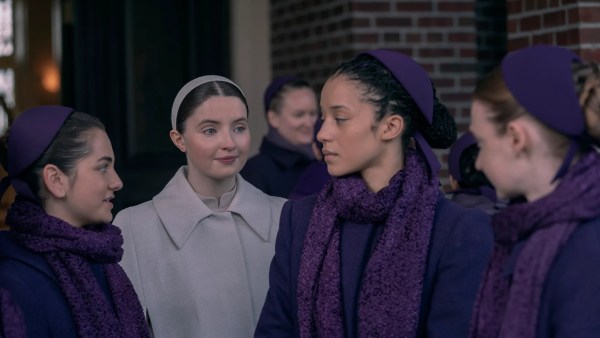 The Testaments is a teen drama set in the dystopian world of Gilead.
The grown-ups get to do very little here. We finally get to see the pre-Gilead life of Aunt Lydia, and how she grabbed a seemingly authoritative spot in a world run by men. The rest of the Aunts here are like the guards at gas chambers who have their blinders on. With all the talk about God that happens on this show, you are often reminded that even as a concept, ‘God’s will’ is a tool to fool those who don’t know any better.
Story continues below this ad
If you have witnessed Gilead in all its gory glory, you won’t be shocked
It would be impossible to get into the world of The Testaments without knowing anything about the world of The Handmaid’s Tale, so you wonder why creator Bruce Miller (who was also the creator of the prequel) treats many plot points as revelations. The horrors of Gilead aren’t unknown to the viewers. It is, of course, macabre to watch teenage girls killing a man, but if you have witnessed Gilead in all its gory glory, it isn’t shocking. You also wonder why Agnes’ identity is treated like some sort of a secret when you already know who she is from the very start.
It is quite odd that the show does not recognise Agnes’ race while they keep bringing up her “lineage”. A world as whitewashed as this cannot be blind to one’s race. You also can’t help but think that even though the show is supposed to be a ‘dystopian’ USA, girls and women in Afghanistan are actually living horrors much worse than this in the present day. Unlike The Testaments, their world isn’t fictional, and the truth of those women is certainly stranger than the make-believe world we see here.